Launch offer — valid today only

📄 Digital book in PDF · read it on your phone or print it

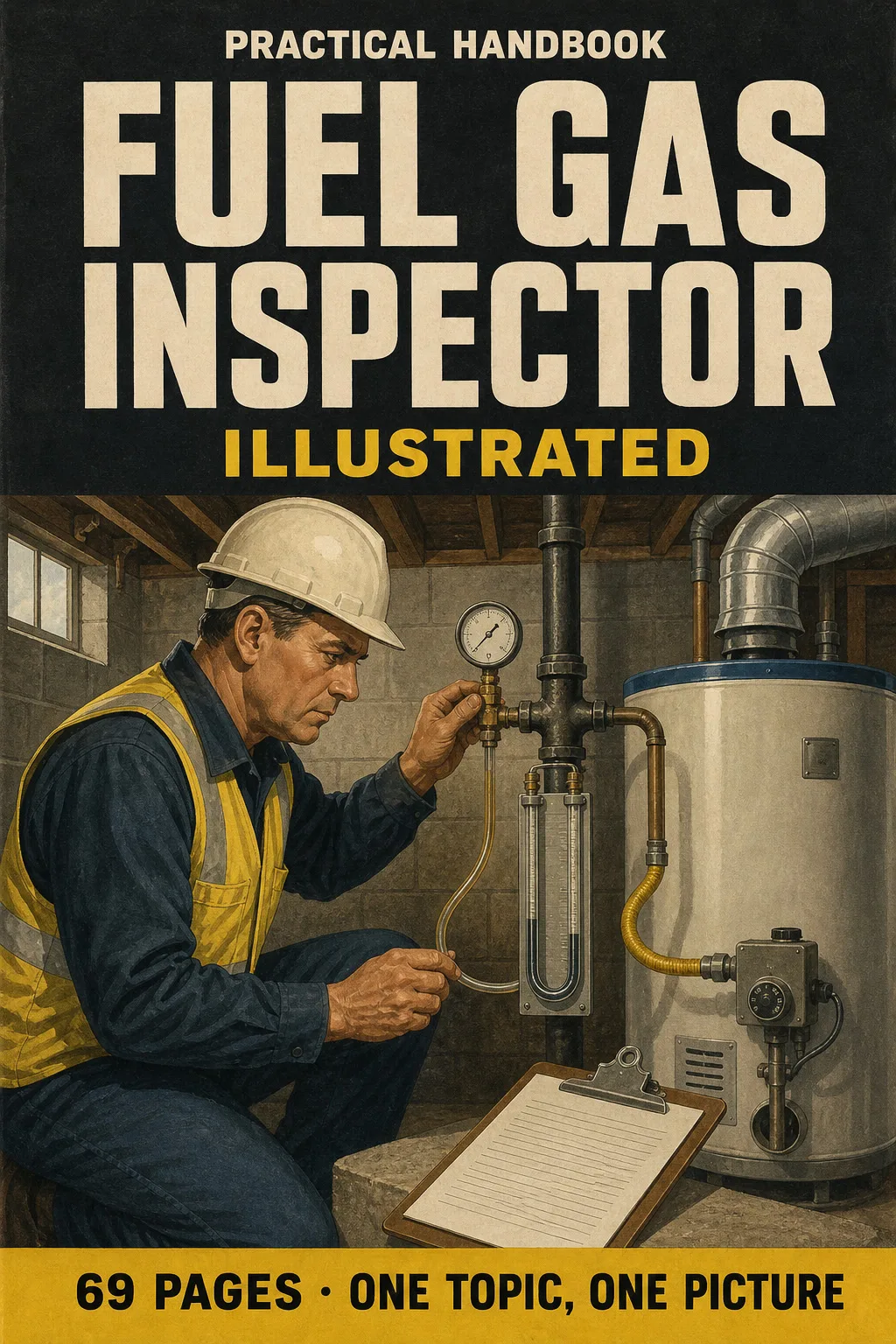
The Fuel Gas Code in Drawings: Know Which Section to Open on the ICC FG Exam One Code Topic on Every Page

Gas piping, pipe sizing, pressure testing, shutoff valves, combustion air, venting, appliance location and the red tag. Every topic gets its own page: the drawing first, then what you need to remember. 69 illustrated pages.

GET THE FUEL GAS CODE IN DRAWINGS

🔒 Secure checkout · PDF by email · 30-day guarantee

Every topic, its own pageEach code rule drawn, with the explanation and the code section beside it
69 illustrated pages9 parts, from the open-book exam to the exam day checklist
Up-to-date sourcesIFGC (2021 and 2024 editions), IRC Chapter 24 and NFPA 54
PDF by emailFormat

Look Inside the Book

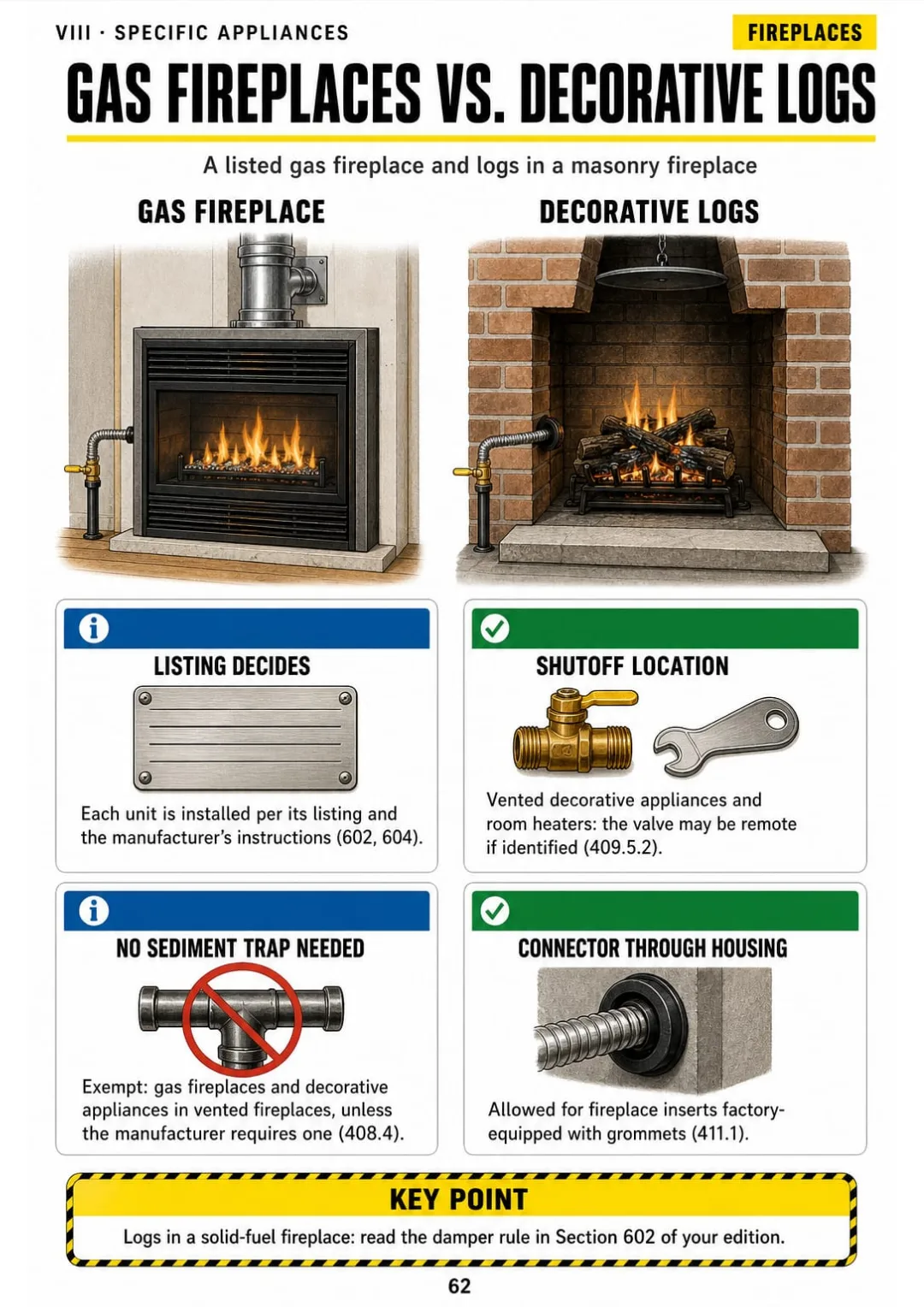
Every page has a big drawing and a box with the numbers, the rules and the code section you need to know:

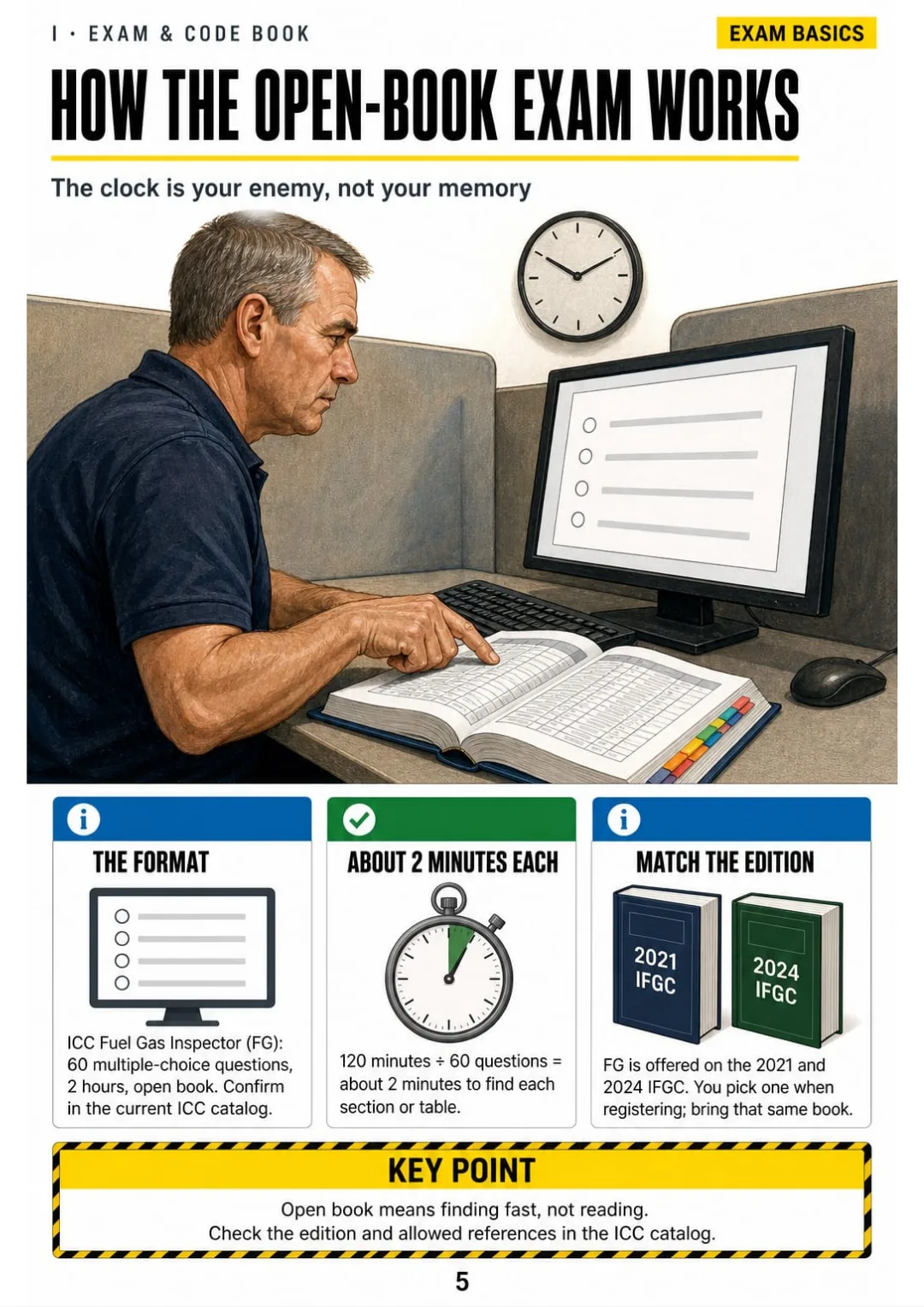
FG exam: 60 questions, 2 hours, open book — about 2 minutes to find each answer.
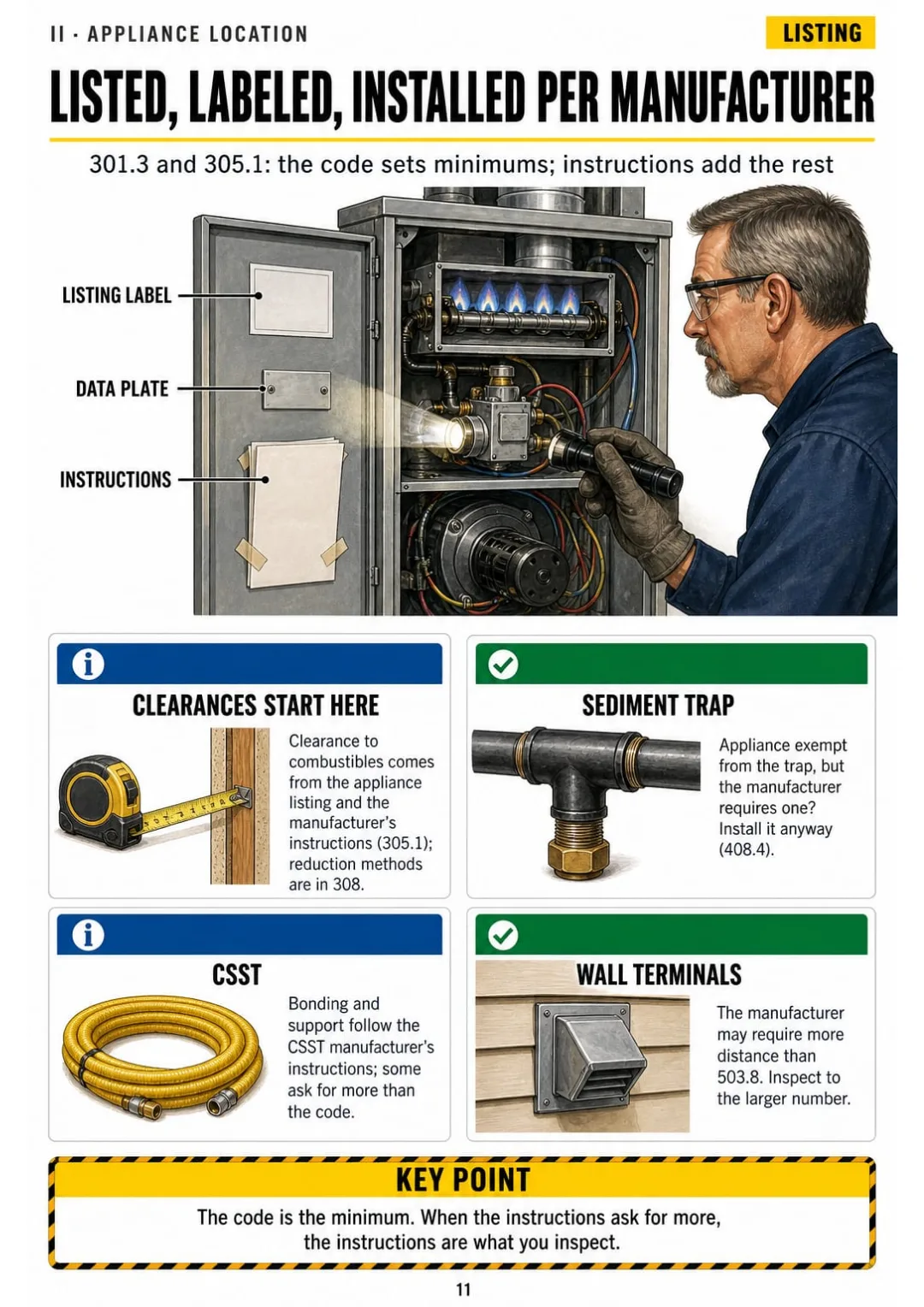
Listing label, data plate and instructions: where the code sends you to the manufacturer
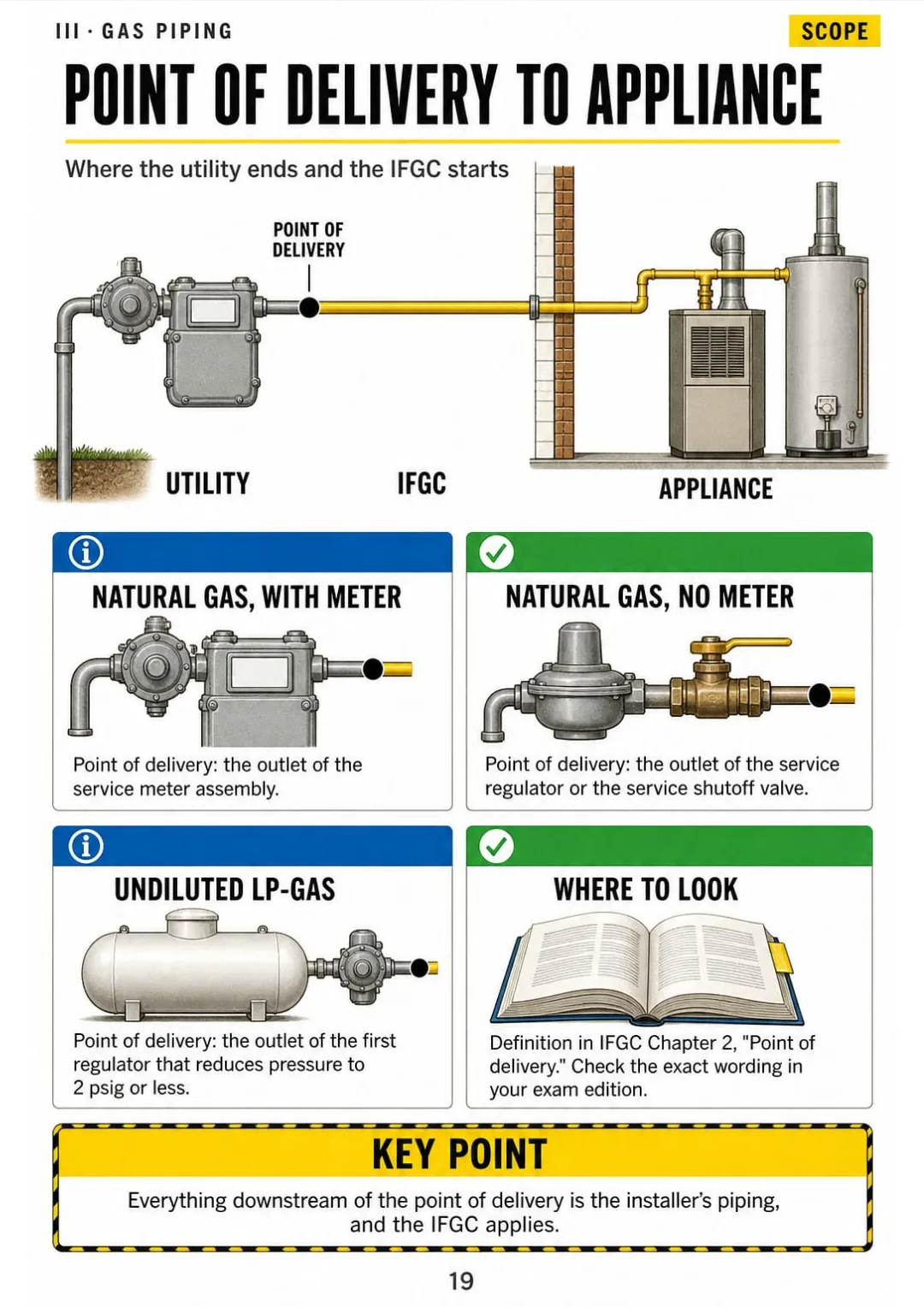
Point of delivery: meter outlet for natural gas; first regulator to 2 psig for LP-gas.
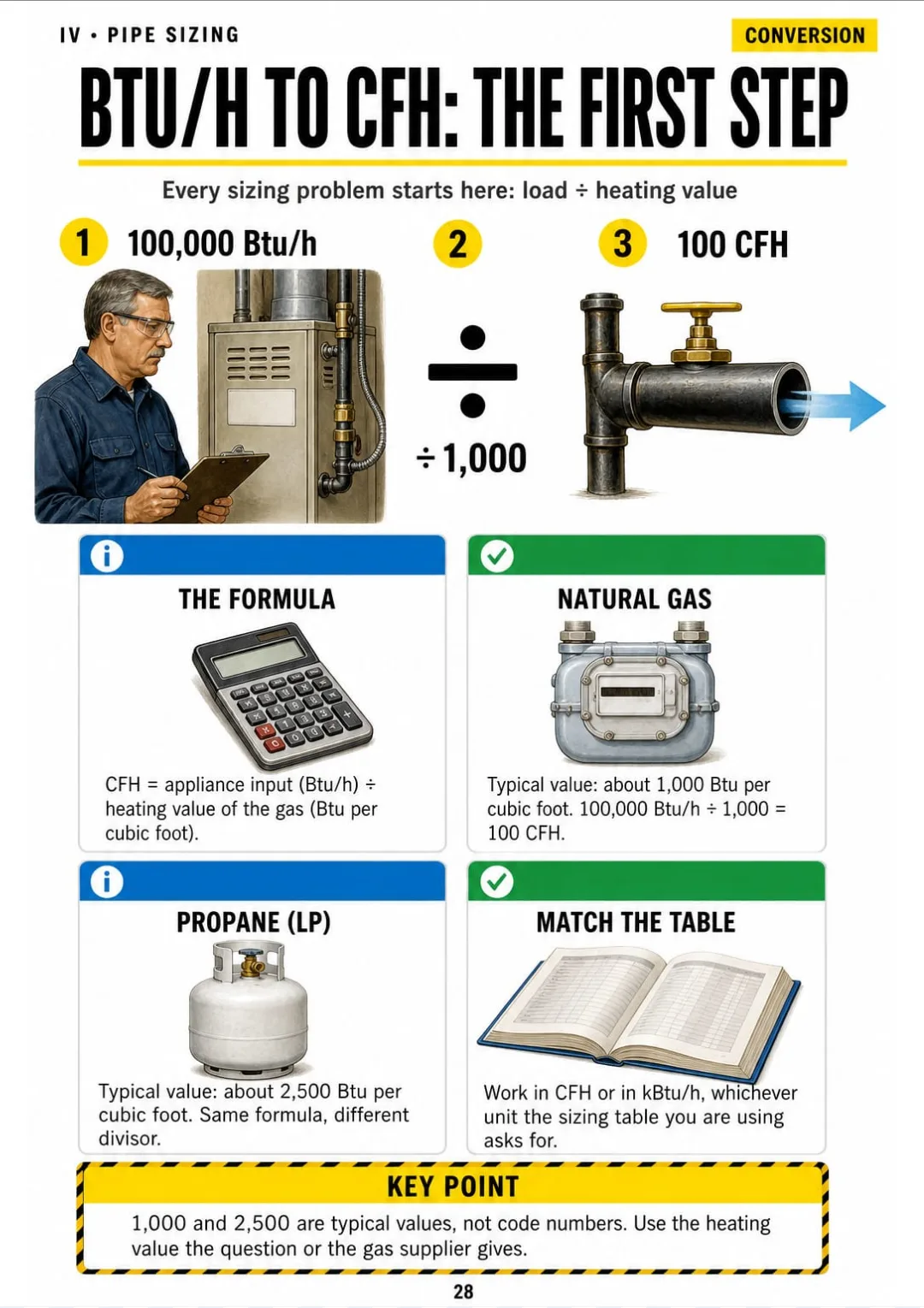
100,000 Btu/h ÷ 1,000 Btu/ft³ = 100 CFH: the conversion that opens every sizing question.
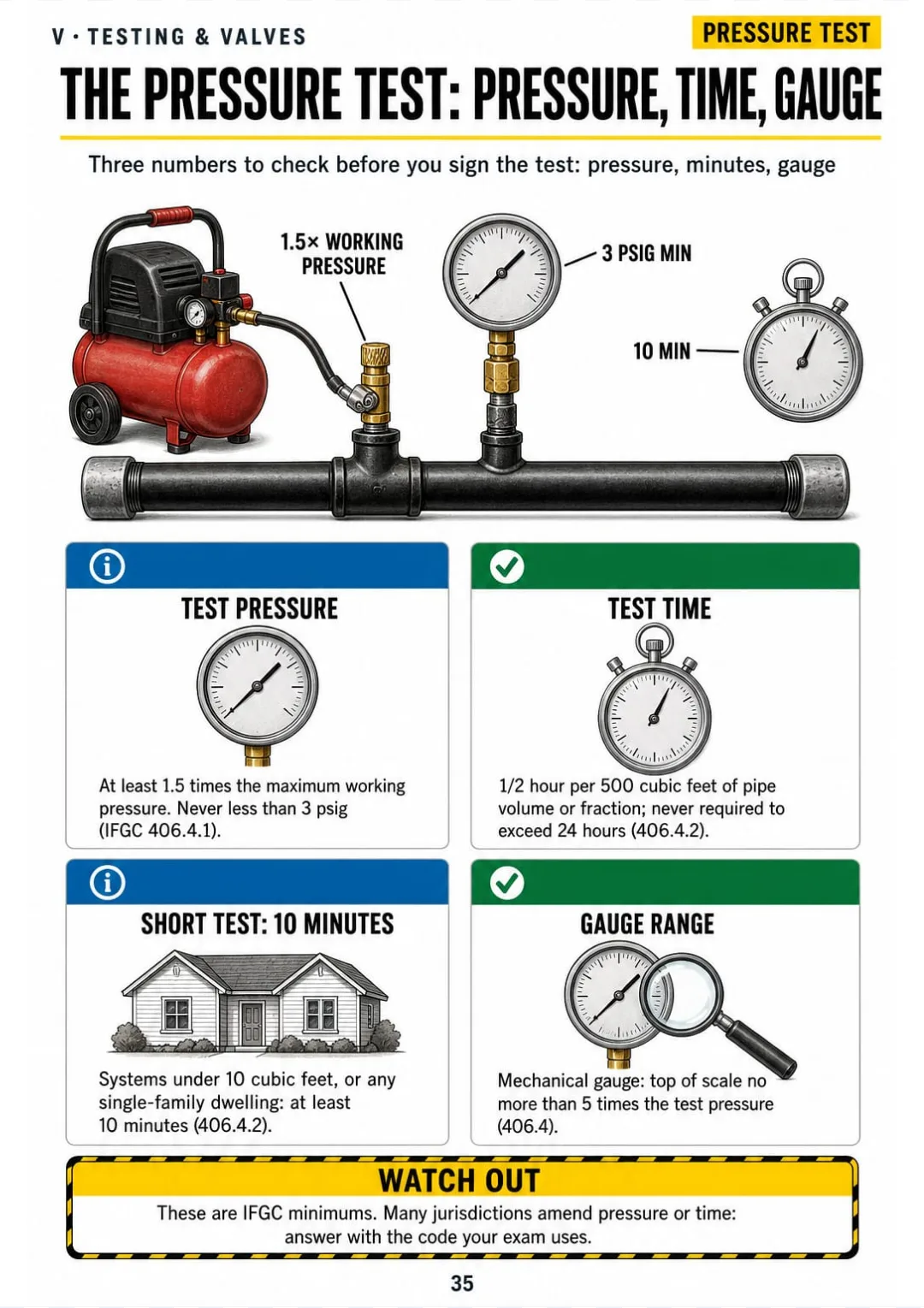
Test pressure 1.5× working pressure, never under 3 psig; 10 minutes minimum in a single-family dwelling.
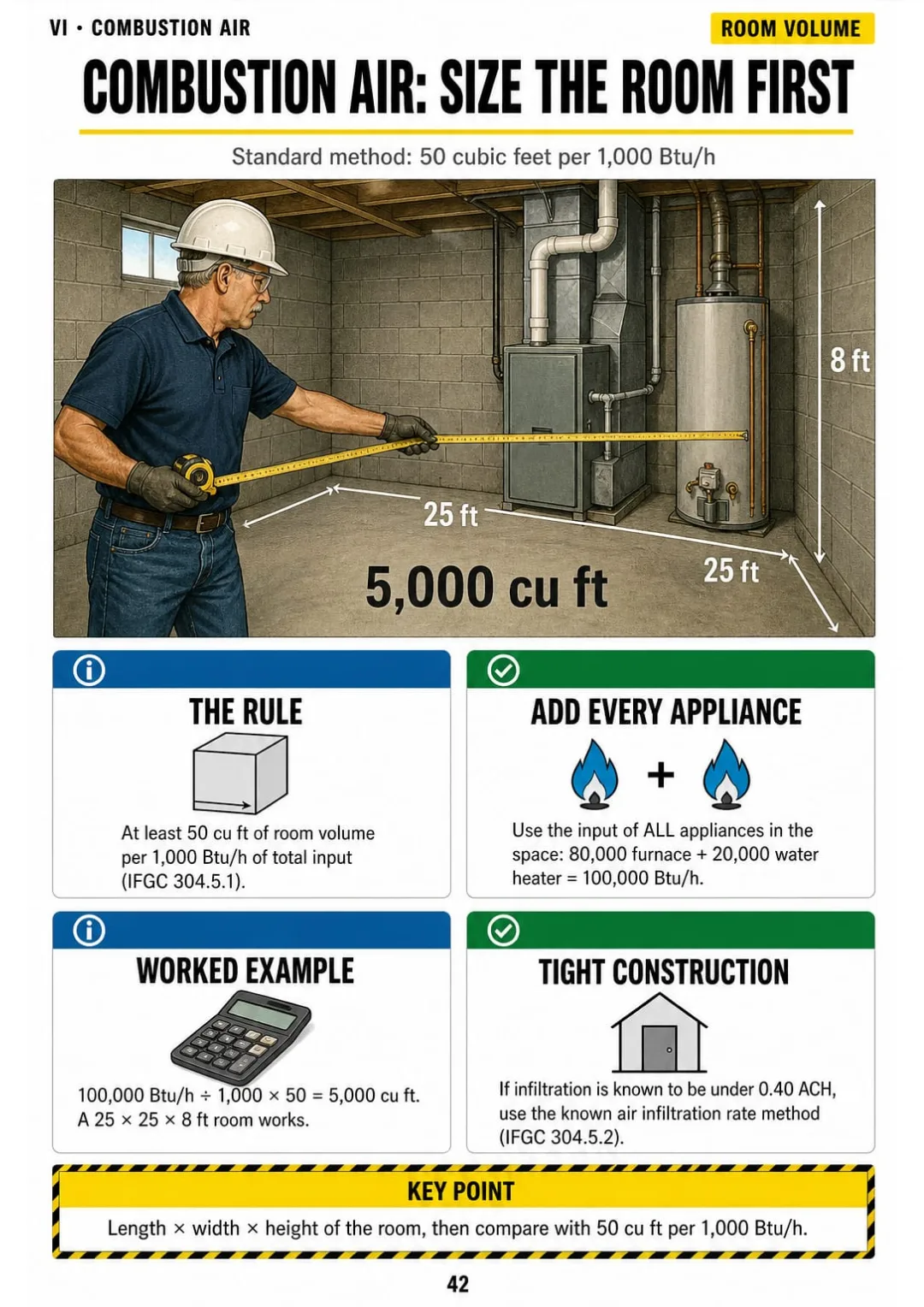
IFGC 304.5.1: 100,000 Btu/h needs at least 5,000 cu ft of room volume.
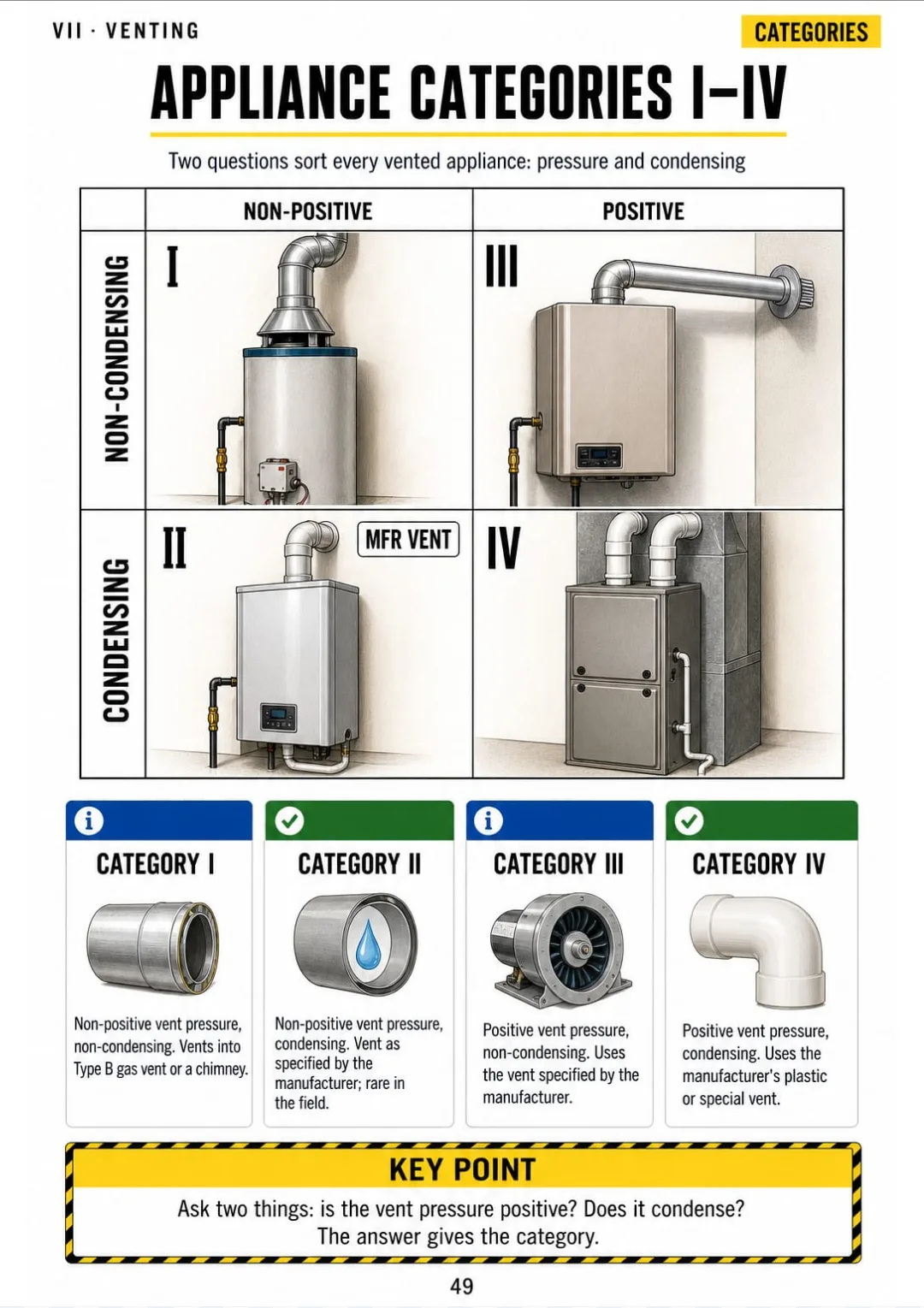
Category I to IV: non-positive or positive vent pressure × non-condensing or condensing, all on one grid.
Fireplaces: no sediment trap required, shutoff may be remote per 409.5.2 (VERIFY).

Swipe to see more →

These are real pages from the book. The table of contents is the full one: 9 parts and 65 topics.

The Problem Isn't You. It's How the Code Was Explained to You.

FG exam, code book open on the desk. The question shows a gas meter on a new house and asks where the piping the code covers actually starts. You've piped hundreds of houses, and right now you're not sure: the meter, the regulator or the service line?

The code book does answer it, but in definitions and paragraphs: point of delivery, service meter assembly, outlet of the final regulator. Separate definitions, pages apart, and none of them drawn.

Point of delivery: meter outlet for natural gas; first regulator to 2 psig for LP-gas.

In the book, that same topic is one page: the meter on one side, the appliance on the other, and the point of delivery marked where the code takes over. Natural gas at the meter outlet, LP-gas at the final regulator outlet, with the code section to look up at the bottom.

Then come the numbers that look alike: 3 psig, 6 feet, 18 inches, 50 cubic feet per 1,000 Btu/h. Read in paragraphs, they blur together by the next morning.

You see where the system starts, you know which section to open, and you answer without flipping back through the code book.

COMPARE FOR YOURSELF

Same Topic, Two Ways to Study It

THIS
  • The code book: line after line
  • Listing, labels and instructions explained only in words
  • You walk into the exam with doubts
Fuel-gas appliances covered by the code are required to be listed and labeled for the application in which they are used, except where an alternative approval is granted by the code official on the basis of an accepted engineering evaluation. Installation is to follow both the code and the manufacturer's installation instructions; where the two differ, the more restrictive requirement governs. The listing label and data plate must remain legible, and the installation instructions are to be kept available at the site for review at the time of inspection.
FOR THIS
  • Listing label, data plate and instructions in one drawing
  • The code section in a box at the bottom
  • You see it and you get it
Listing label, data plate and instructions: where the code sends you to the manufacturer
CONTENTS

Take a Look at the 9 Parts and 65 Topics

The exam and the code book, general regulations, gas piping, pipe sizing, testing and valves, combustion air, venting, specific appliances and field inspection: 69 pages, all illustrated

IThe Exam and the Code Book · pp. 5-10
  1. How an Open-Book Exam Really Works
  2. The IFGC Map: 8 Chapters on One Page
  3. Tabbing and Highlighting Your Code Book
  4. The 4-Step Method: Chapter → Table → Row/Column → Exception
  5. Chapter 2 Words That Change the Answer
  6. IFGC, IRC Chapter 24 and NFPA 54
IIGeneral Regulations and Appliance Location · pp. 11-18
  1. Listed and Labeled: Install per Manufacturer
  2. Rooms Where Fuel-Burning Appliances Don't Go
  3. Garages: The 18-Inch Rule
  4. Attic Appliances: Access and Service Space
  5. Crawl Spaces and Rooftops
  6. Clearance to Combustibles and How to Reduce It
  7. Condensate Disposal
  8. Electrical Bonding of Gas Piping and CSST
IIIGas Piping: Materials and Installation · pp. 19-27
  1. From Point of Delivery to Appliance
  2. Approved Pipe Materials at a Glance
  3. Joints and Fittings
  4. Prohibited Locations for Gas Piping
  5. Concealed Piping and Shield Plates
  6. Underground Piping: Depth and Tracer Wire
  7. Pipe Support Intervals
  8. Drips, Sediment Traps and Slope
  9. Appliance Connectors
IVGas Pipe Sizing · pp. 28-34
  1. Btu/h to CFH: The First Conversion
  2. Picking the Right Table
  3. Longest Length Method, Step by Step
  4. The Most Common Sizing Mistakes
  5. Branch Length Method
  6. 2 PSI Systems and Hybrid Pressure
  7. Sizing CSST and LP Systems
VTesting, Purging, Valves and Regulators · pp. 35-41
  1. The Pressure Test: Pressure, Time, Gauge
  2. Test Medium and What to Isolate
  3. Purging: Inside or Outside
  4. Appliance Shutoff Valves: Within 6 Feet
  5. Other Shutoff Valves
  6. Pressure Regulators and Their Vents
  7. Overpressure Protection
VICombustion Air · pp. 42-48
  1. Why Combustion Air: Sizing by the Room
  2. Indoor Air: Two Openings to Another Room
  3. Outdoor Air: Two Openings
  4. Outdoor Air: One Opening
  5. Combination Indoor and Outdoor Air
  6. Louvers, Grilles and Screens
  7. Mechanical Combustion Air and Direct-Vent
VIIVenting · pp. 49-57
  1. Appliance Categories I–IV
  2. Vent Types: B, BW, L, Single-Wall, Masonry
  3. Vent Connectors: Rise, Length and Slope
  4. Common Venting Two Appliances
  5. Sizing Category I Vents with the Tables
  6. Gas Vent Termination Above the Roof
  7. Through-Wall Terminals: Distances to Openings
  8. Masonry Chimneys and Liners
  9. Draft Hoods and Barometric Dampers
VIIISpecific Appliances · pp. 58-64
  1. Furnaces and Boilers
  2. Water Heaters (Fuel Side)
  3. Clothes Dryer Exhaust
  4. Unvented Room Heaters
  5. Gas Fireplaces and Decorative Appliances
  6. Ranges, Cooktops and Commercial Kitchens
  7. Outdoor Appliances and Generators
IXInspection in the Field and Final Review · pp. 65-69
  1. Permits, Inspections and the Red Tag
  2. Existing Appliances: Appendix D Check
  3. The 10 Numbers to Remember
  4. Where to Find It: Topic → Section Index
  5. Exam Day Checklist

One Page, One Topic, All Clear

Think of it this way:

Exam question: a 100,000 Btu/h furnace, a run of pipe, a sizing table to read. The clock is running and you have about two minutes.

You've already seen that page, so you know the order: 100,000 Btu/h divided by about 1,000 Btu per cubic foot is 100 CFH. Then the longest length, then the row, then the column, straight in your code book.

Test pressure 1.5× working pressure, never under 3 psig; 10 minutes minimum in a single-family dwelling.

Or on the job: a water heater in a 7 × 10 ft utility room with an 8 ft ceiling. That's 560 cubic feet, and the combustion air page shows the next step: openings to another room or to the outdoors.

Fuel Gas Inspector Illustrated is 9 parts and 65 topics, all drawn, with the 10 numbers to remember, a topic-to-section index and an exam day checklist at the end.

What you see drawn, you don't have to memorize.

What's Inside Fuel Gas Inspector Illustrated:

Ipp. 5-10

The Exam and the Code Book

How the open-book exam works, the IFGC chapter map, tabbing your code book, the 4-step method, Chapter 2 definitions and how the IFGC, IRC Chapter 24 and NFPA 54 fit together.

IIpp. 11-18

General Regulations and Appliance Location

Listed appliances and manufacturer's instructions, rooms where appliances don't go, the 18-inch garage rule, attics, crawl spaces and rooftops, clearances, condensate and bonding of piping and CSST.

IIIpp. 19-27

Gas Piping: Materials and Installation

From point of delivery to appliance, approved materials, joints, prohibited locations, concealed piping and shield plates, underground depth and tracer wire, support intervals, sediment traps and connectors.

IVpp. 28-34

Gas Pipe Sizing

Read any sizing table in the same order: Btu/h to CFH, longest length, row, column. Plus picking the right table, the branch length method, the most frequent sizing mistakes, 2 psi and hybrid systems, CSST and LP.

Vpp. 35-41

Testing, Purging, Valves and Regulators

The pressure test, test medium and what to isolate, purging, shutoff valves within 6 feet, other shutoffs, regulators and their vents, overpressure protection.

VIpp. 42-48

Combustion Air

Sizing by room volume, indoor air, outdoor air with one or two openings, combination air, louvers and screens, mechanical combustion air and direct-vent.

VIIpp. 49-57

Venting

Appliance categories I–IV, vent types, connector rise and slope, common venting, Category I vent tables, roof and through-wall terminations, masonry chimneys, draft hoods and barometric dampers.

VIIIpp. 58-64

Specific Appliances

Furnaces and boilers, water heaters, dryer exhaust, unvented room heaters, gas fireplaces, ranges and commercial kitchens, outdoor appliances and generators.

IXpp. 65-69

Inspection in the Field and Final Review

Permits, inspections and the red tag, the Appendix D check for existing appliances, the 10 numbers to remember, a topic-to-section index and the exam day checklist.

At the end of the book: The 10 numbers to remember, a topic-to-section index and an exam day checklist.
Plus: 2 Free Books

FG Exam-Style Practice Questions

BONUS 1: «FG Exam-Style Practice Questions»

Value on its own: US$ 17.90

Practice questions in the style of the open-book exam, each answer with the code section where you find it, so you train your speed with the book, not just your memory.

15 Common Fuel Gas Mistakes, Before & After

BONUS 2: «15 Common Fuel Gas Mistakes, Before & After»

Value on its own: US$ 14.90

The most frequent fuel gas mistakes drawn side by side, wrong and right, so you spot them on the exam and on the job site at a glance.

Fuel Gas Inspector Illustrated with 2 Free Books

  • Fuel Gas Inspector Illustrated: 69 illustrated pagesUS$ 63
  • BONUS 1: FG Exam-Style Practice QuestionsUS$ 17.90
  • BONUS 2: 15 Common Fuel Gas Mistakes, Before & AfterUS$ 14.90
  • High-resolution PDF to printIncluded
Total value US$ 95.80
YOUR PRICE:
US$ 27
You save US$ 68.80
YES, I WANT FUEL GAS INSPECTOR ILLUSTRATED FOR US$ 27

📄 This is a digital PDF book sent to your email: nothing is printed or shipped.

Secure purchaseEncrypted payment30-day guarantee

PDF by email: We email you Fuel Gas Inspector Illustrated as a PDF, together with the two free books. It's a single payment: no installments, no extra charges.

Who This Book Is For

You're studying the IFGC at night

You're studying the IFGC at night

Each code topic on one page, with the section to find it, so an hour after work actually moves you forward.

Your FG exam date is close

Your FG exam date is close

The 4-step method and the topic-to-section index train you to find the right table fast in an open-book exam.

You already work as an inspector

You already work as an inspector

Print the pages you need and have the rule and the code section at hand when a contractor questions a red tag.

Everything You Get Today

US$ 95.80US$ 27
YES, I WANT FUEL GAS INSPECTOR ILLUSTRATED FOR US$ 27

📄 This is a digital PDF book sent to your email: nothing is printed or shipped.

30DAYS
GUARANTEE

30-Day Guarantee

Try Fuel Gas Inspector Illustrated for 30 days, bonus books included.

We refund everything if the file won't open, if the book isn't what you see here, if you were charged twice or if the email doesn't arrive. Just email us.

You pay once. No subscriptions.

Frequently Asked Questions

Is it for me if I've installed gas for years and now I'm going for the FG certification?

Yes. It doesn't teach you how to pipe a house: it shows each IFGC topic drawn and where to find it in the code book, which is what an open-book exam asks of you.

Does it match my exam's IFGC edition, 2021 or 2024?

It's built on the International Fuel Gas Code, 2021 and 2024 editions, with IRC Chapter 24 and NFPA 54 as references. Where a section number or a requirement differs between the two editions, the page shows it. Check which edition your ICC exam bulletin lists and use that code book.

Is it official material?

No. It's an independent study book, not published, endorsed or reviewed by the ICC. It doesn't give you a certificate or CEUs: the FG certification comes only from passing the ICC exam.

Does it replace the code book or a prep course?

No. You still need the IFGC edition your exam uses, and that's the book you take into the exam: the testing center only allows the references listed in your ICC bulletin, so this PDF stays home. You study with it before, so on exam day you know which chapter, table and section to open.

Are the practice questions the ones on the exam?

No. They're written for this book, in the style of an open-book exam, with the code section where you find each answer.

When and how do I get it?

As a PDF by email, at the address you enter at checkout. The 2 bonus books come the same way.

Do I have to pay every month?

No. It's a one-time payment, with no subscription.

Can I have it on paper?

Yes. The PDF is ready to print: print the whole book or just the pages you want to take to the job site.

How does the refund work?

You have 30 days. We refund everything if the file won't open, if the book isn't what you see on this page, if you were charged twice or if the email doesn't arrive: just email us.

Before You Close This Page

No more rereading the code with nothing sticking.

Point of delivery, pipe sizing, combustion air: you see them drawn, and that's it.

You walk into the FG exam knowing where everything is.

Drawings make studying faster.

The book is right below.

One-time payment: US$ 27 · Guarantee: 30 days · PDF by email

YES, I WANT FUEL GAS INSPECTOR ILLUSTRATED FOR US$ 27

📄 This is a digital PDF book sent to your email: nothing is printed or shipped.